Insects in Row Crops
2025 IPM Report #1 – Corn Rootworms, Slugs and Snails
Mexican Corn Rootworm
Mexican corn rootworm is causing damage to fields in Lafayette County, Arkansas. The primary damage comes from the larvae feeding on roots, leading to lodging and smaller ears due to weakened root systems. Plants often fall over early and then straighten up, creating a gooseneck appearance, which can complicate harvesting. It is easy to find the adult rootworm beetles, which are green with brown stripes along their elytra in these fields at this time.
This pest originates from Central America and is prevalent in Texas, Arizona, and parts of Oklahoma. Adult beetles lay eggs in the soil during late summer, which then overwinter. In spring, larvae emerge to feed on corn roots, disrupting the plant's water and nutrient absorption, and leading to stunted growth or lodging. Adult beetles also feed on corn silks, which can affect pollination.
To manage Mexican corn rootworm, growers can use crop rotation, plant rootworm-resistant hybrids, or apply high-rate insecticide seed treatments or in-furrow insecticides at planting. The most effective of these tactics is to rotate to something other than corn next year. When eggs hatch next spring, they will not have a suitable host to feed upon and will die off. If the field must go back into corn next year, it would be recommended to use a rootworm-resistant hybrid or consider a higher rate of an insecticide seed treatment at planting.
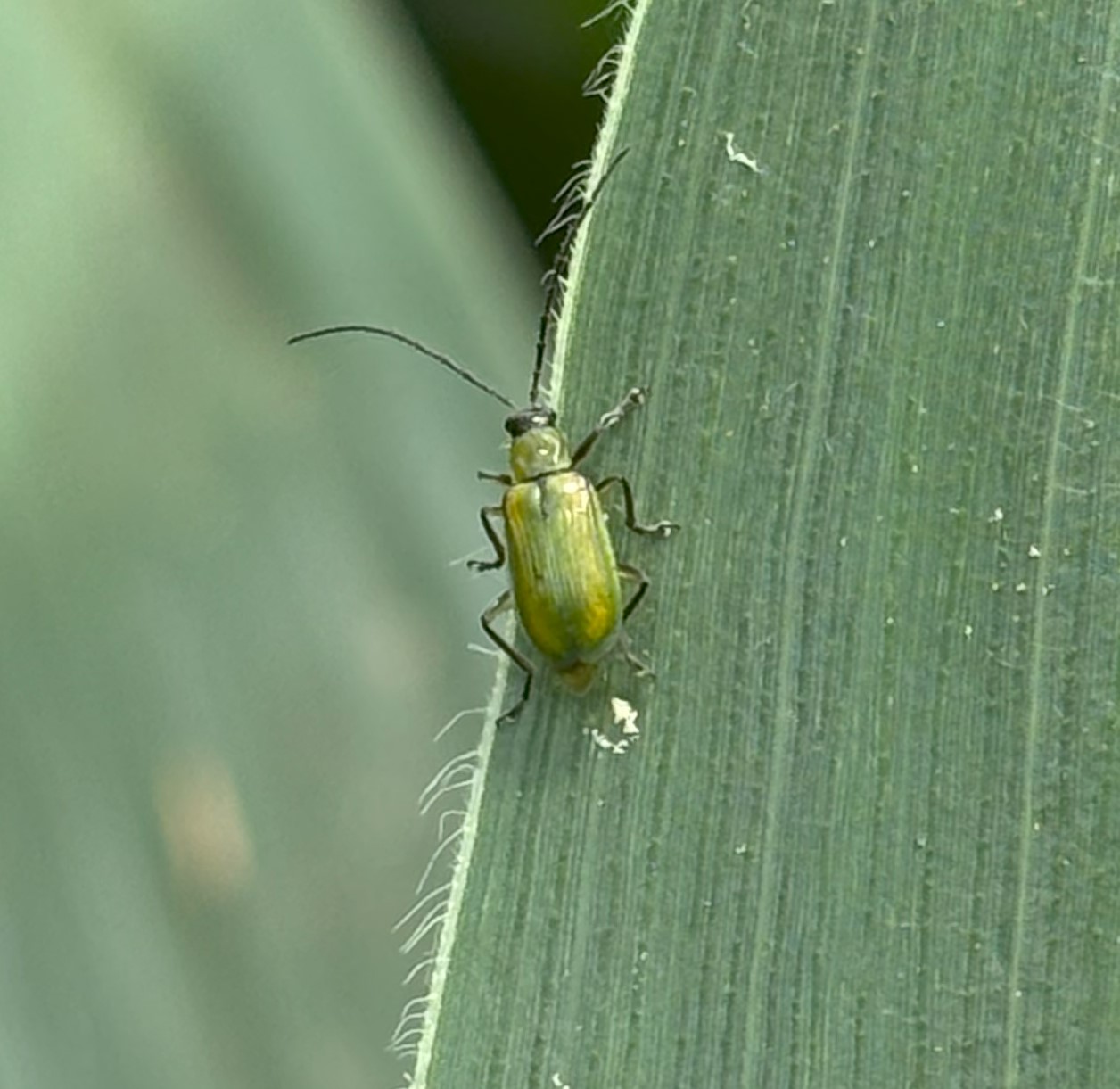
Corn rootworm adult.
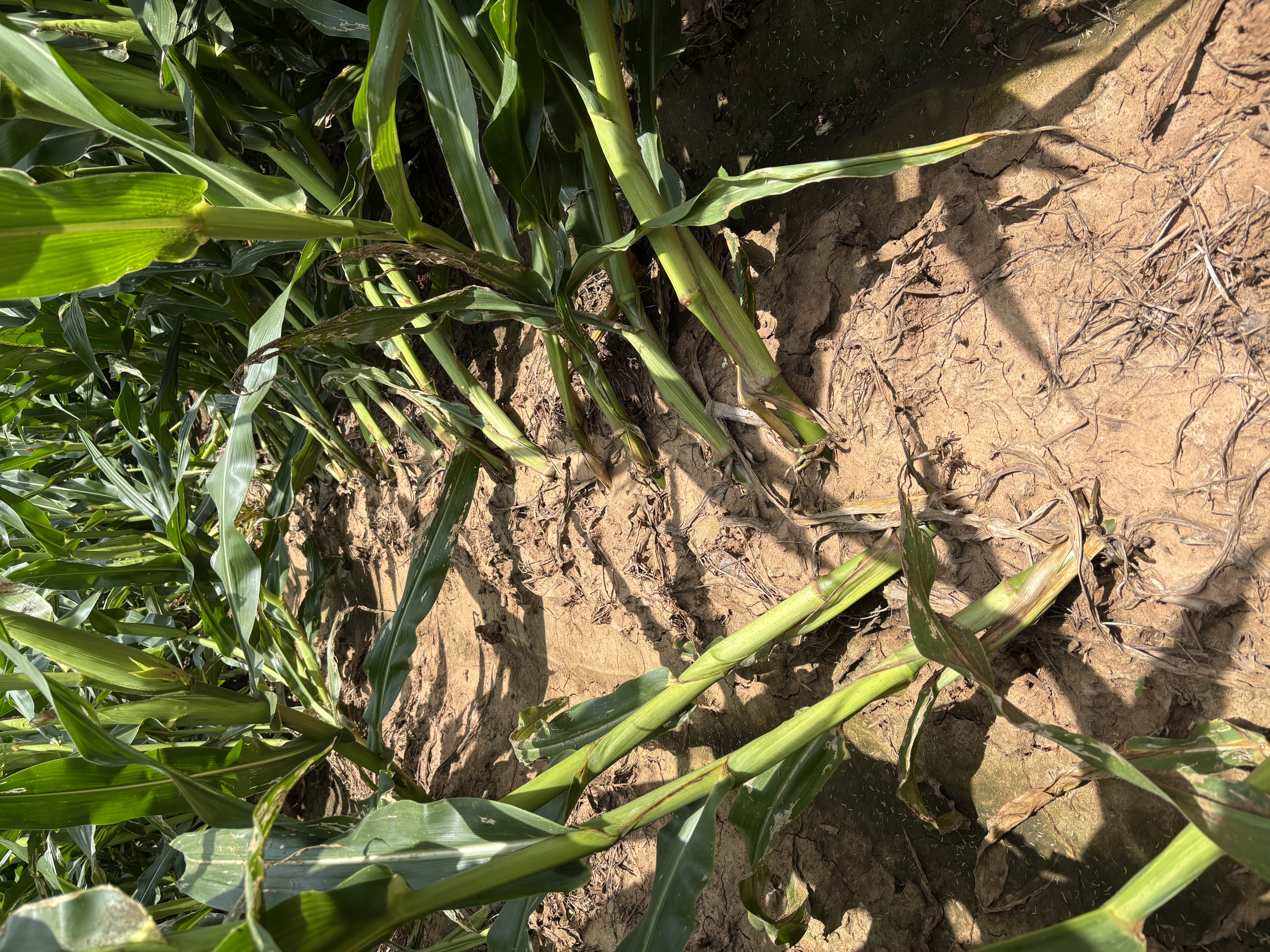
Lodged corn caused by Mexican Rootworm. Photo by Jerri Dew.
Southwestern Corn Borer
We are picking up a few southwestern corn borer moths in traps near areas that were in conventional corn last year. Although it is still early in the cycle, the current numbers are relatively low. We generally expect to see numbers go up in late June or early July. Current trap catches can be seen on our website here.
Snails and Slugs
We are seeing good numbers of snails and slugs on some seedling cotton and soybean this year. This is due to the wet conditions we have experienced up to this point. It does not appear that the snails are doing any feeding on the plants, but their high numbers on seedling leaves are in some instances weighing down the plant. When leaves are covered it may also interfere with photosynthesis and slow plant development on an already late crop. We are seeing significant damage from slugs, particularly on seedling soybeans. There are not many options as far as chemical control goes. We get a lot of questions on whether any insecticides will control slugs and the answer is not really. The two active ingredients that are labeled that give effective control are metaldehyde (Deadline) and iron phosphate.
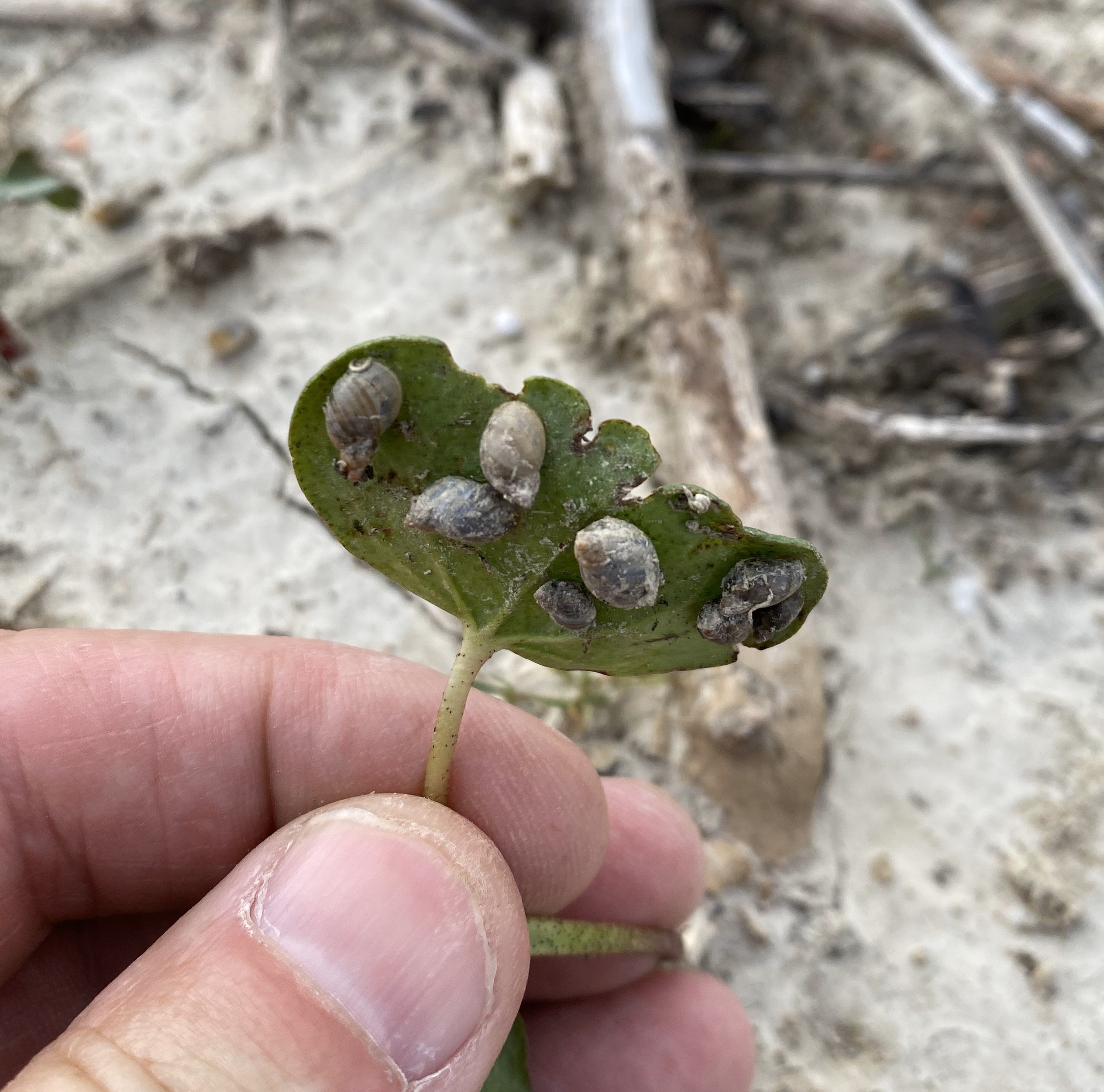
Snails on seedling cotton. Photo by Chris Grimes
This work is supported by the Crop Protection and Pest Management Program [grant no. 2024-70006-43564/project accession no. 1032819] from the USDA National Institute of Food and Agriculture.