Scout and Manage the most Prevalent Disease in Arkansas Rice
Rice sheath blight is the most prevalent disease of rice in Arkansas. Start scouting from green ring with greater attention between 7 to 14 days after jointing and continue until after heading (50% heading).
Notes about Rice Sheath Blight
- Automatic application of fungicides is not advisable due to the potential development of fungicide resistance.
- Sheath blight can start from the soil line in furrow irrigated susceptible rice and from the water line in flooded rice (Figure 1).
- Sheath blight in furrow irrigated rice is more severe in areas where the crop is stressed by drought.
- Sheath blight disease highly favors warm temperatures and high humidity.
- Excessive seeding and nitrogen fertilizer rates favor disease progress and spread.
- Sheath blight mainly kills the sheath, followed by the leaf (Figure 2), and then the panicles.
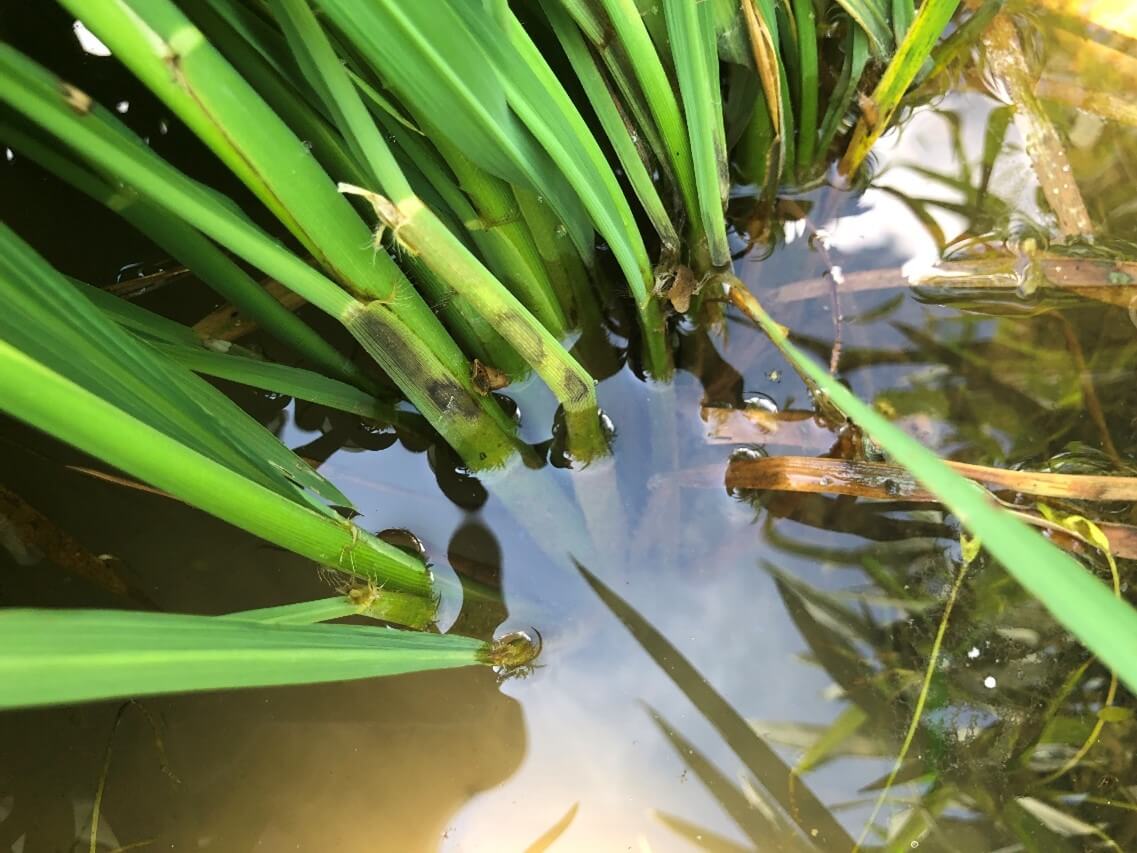
Figure 1. The sheath blight fungus penetrates the sheath of rice plants at the water line.

Figure 2. Sheath blight mainly kills the sheaths followed by leaves.
Determining Sheath Blight Threshold for Fungicide Application
For susceptible cultivars with an “S” or “VS” rating, the recommended threshold for fungicide application is at 35% positive stops or more. For moderately susceptible cultivars rated “MS”, the threshold is 50% positive stops or more. Positive stop counts assume scouting in a zig-zag pattern (Figure 3) over a bulk of a rice field, not including field edges and bottoms. For more information, refer to the MP192 publication, pages 126 to 129.

Figure 3. Sheath blight scouting requires a zig-zag pattern away from field bottoms and edges to determine the threshold before a fungicide application decision.
Management Tips for Using Fungicides
To supress sheath blight alone, it is not profitable for Arkansas rice producers to apply fungicides more than once. Delaying fungicide application farther to boot stages is wise if dry weather conditions slow the disease progress and the upper three leaves are not threatened by the disease. Sometimes fungicide application timing for sheath blight may be paired with protective fungicides for kernel and false smut which should be applied from early boot to mid-boot.