Arkansas Rice Update 5-15-26
Arkansas Rice Update 2026-10
May 15, 2026
Jarrod Hardke, Scott Stiles, & Bob Scott
“It’s faster horses…”

Pause for Station Identification
We bought a ticket; we’re going to ride the rollercoaster. A week of improved temps and sunshine has been a welcome sight. Significant improvement for the rice crop overall. For all the rice improving, it put a spotlight on those fields reeling from the cool, cloudy, and wet conditions of the previous week. Seedling disease and herbicide injury were the prominent conversations this week, both of which were caused/exaggerated by recent conditions.
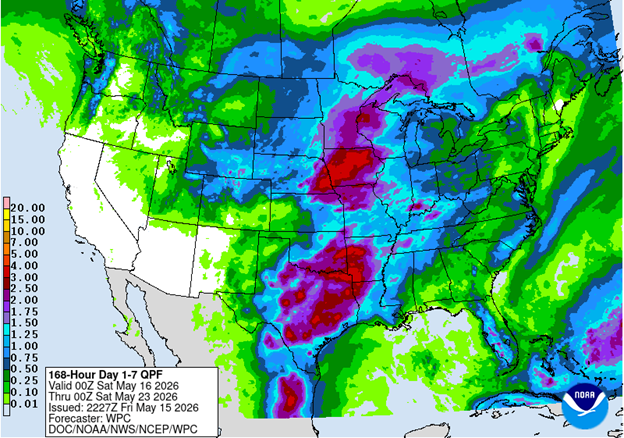
Now, of course, we’re looking at an upcoming forecast with a return to clouds and rain. Roughly 6 straight days of nearabout 50% rain chances. Temperatures will be cooler than this week, but still better than the first ten days of May. Most notably, the low temps from April 30 to May 8 were routinely in the low 50s and 40s. Next week the daytime highs will drop some but the lows will mostly stay up in the 60s. It may not seem like a lot, but that bump in average daily temperature should keep crop health from suffering as much as in the last cooldown.
At 93% planting progress as of Monday’s report, it’s all over but the shouting. Remaining acres should have largely found their home this week other than some odd situations. Now we’ll wait until June 30 for the Acreage Report and our next guess at how rice acres ended up.
In this update is info on crop progress, herbicide injury and drift, and rice markets.
Let us know if we can help.
Fig. 1. Arkansas rice weekly planting progress, 2013-2026.
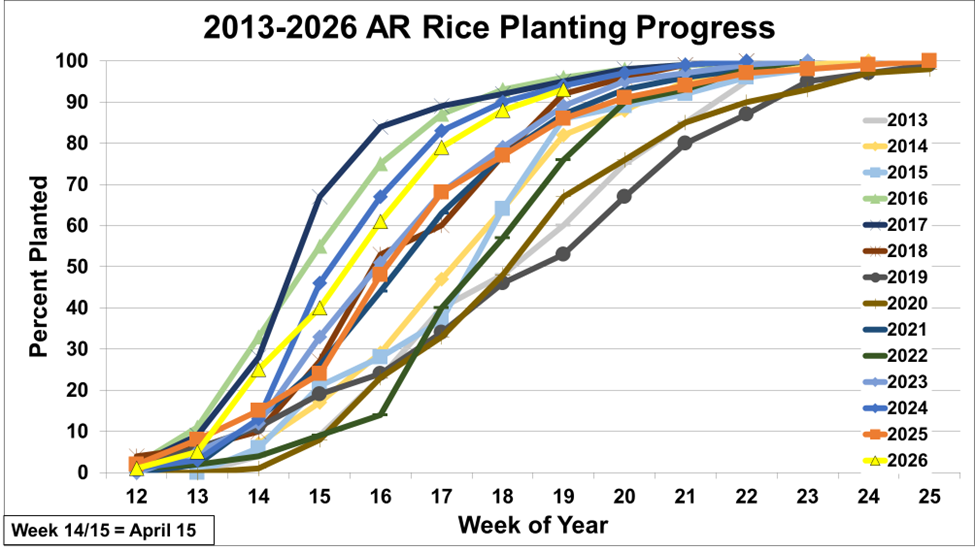
Fig. 2. NOAA 7-day precipitation forecast.
Bobbing and Weeding
Bob Scott
This year rice (and other crops) kinda got a one-two punch for crop injury. The cold weather has led to slow growth which means the seedling crops sit there in the herbicide-treated zone or are not growing well when POST herbicides are applied, so it can take an abnormally long time to metabolize or “grow out of” the herbicide and herbicide response can be worse than normal. One example of this has been some Highcard injury to MaxAce rice. My experience is that with warm weather and some time the rice will easily grow out of this. I have also seen this with soybean response to soil-applied herbicides, especially those containing metribuzin alone or in combination with a Group 15 (Dual, Zidua, Verdict, etc.) and/or Valor. There has been some splash-up onto the soil leaves as well as just some slow growth that has led to prolonged exposure of the shoot to the herbicide-treated zone.
The “one-two punch” part comes from the poor conditions we had for applying herbicides, mainly in high winds. Unfortunately, this has occupied most of my time this week. Seeing quite a bit of Clincher drift onto corn, paraquat on everything, and many other combinations of off-target movement.
Any time we have herbicide drift it’s unfortunate. In rice, can significantly delay the time it takes to get rice to flood. If the rice is already flooded, we usually will need to drain the rice to allow it to recover. This leads to loss of preflood nitrogen. Also, drift rarely hits the whole field, so in some cases it becomes necessary to cut a field in half and try and farm the two sides separately if possible. All this adds time, money, and stress to the job of growing rice.
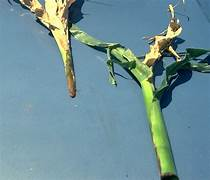
For several years we researched ways of getting rice to recover from various herbicides. One thing that can make a field “look better” is to flush in 100 lbs of ammonium sulfate or 13-13-13. Research has shown this to be a very cosmetic effect and will not work at all until at least two weeks after the drift event, because the sick rice just isn’t growing well enough yet to take up a slug of nitrogen. About the only thing I was able to show from treating these drift fields this way was that you might get to flood a few days sooner, but overall yield was not affected. I have seen plenty of rice fields recover from Roundup and Newpath drift. The graminicides like Highcard and Provisia (or Clincher on corn) can be a little tougher as they often kill the center tiller. I guess my point to this week’s article is to be careful out there. Always be aware of the wind and what is around you when you are making herbicide applications.
Fig. 3. ACCase herbicide on rice.
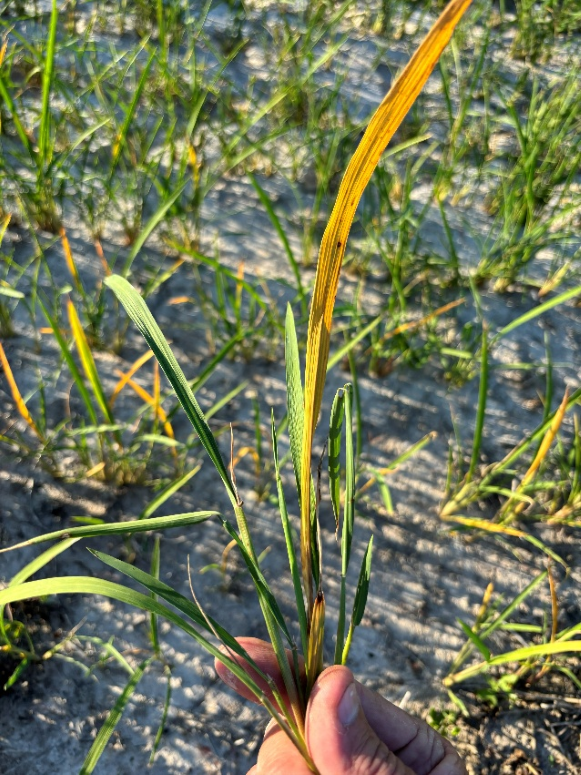
Fig. 4. Liberty on rice.
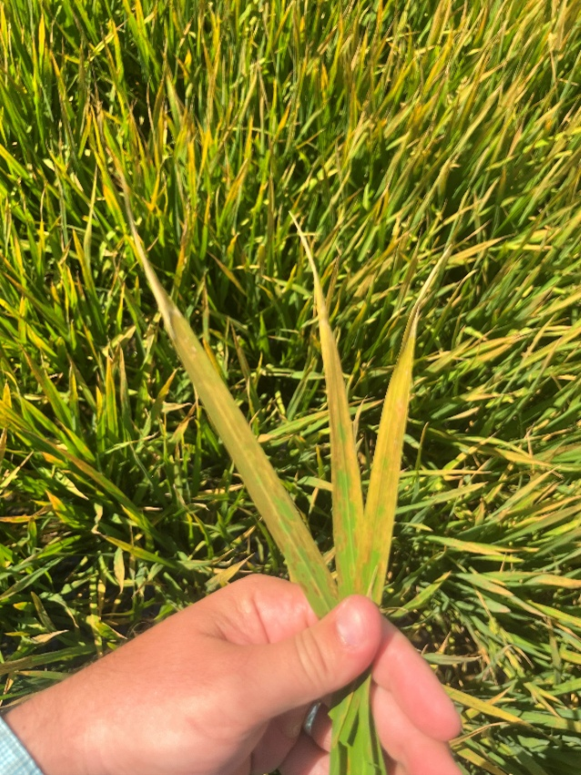
Fig. 5. Glyphosate on rice.
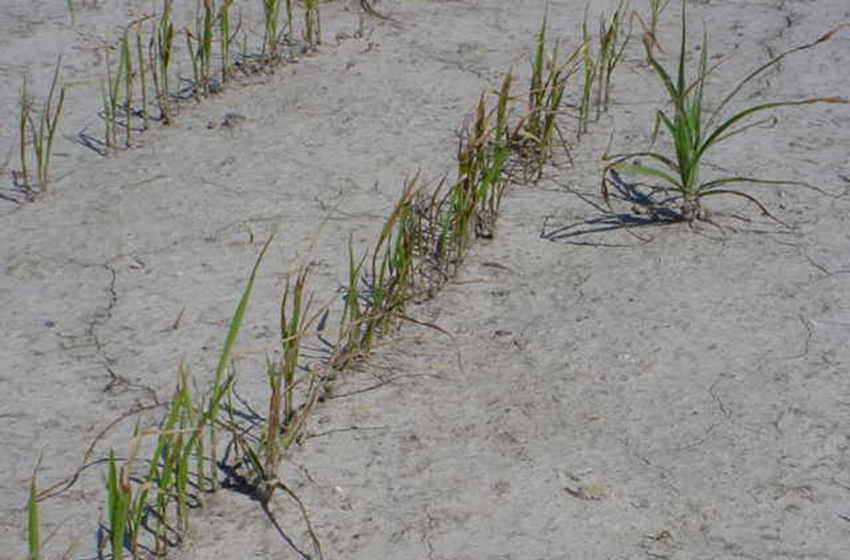
Fig. 6. ACCase herbicide on corn (www.btny.purdue.edu).
Market Update
Scott Stiles
USDA released its monthly WASDE earlier this week. The highlight of the May report is the first official supply and demand estimates for the new crop marketing year. Before diving into the 2026/27 balance sheet, we note USDA made only minor changes this month to the old crop numbers. Imports for 2025/26 were reduced by 2 million to 37 million cwt. This reduced ending stocks by the same amount to 39.6 million cwt.—which is the beginning stocks value for the 2026/27 crop year. There were no changes this month to 2025/26 season average farm price, holding steady for now at $10.40 cwt. or $4.68 per bushel.
Turning to the 2026 crop, long-grain production is expected to be 122.5 million cwt., down 20 percent from last year on reduced acreage. This would be the smallest U.S. long-grain crop since 2011. Keep in mind, for its initial production estimates USDA has traditionally used acreage from the March Prospective Plantings and a trendline yield. Imports were projected at 39 million cwt.; up slightly from 2025/26. Long-grain total supply is forecast at 201.1 million cwt, down nearly 12 percent from last year on lower production.
Table 1. U.S. Long-Grain Supply and Demand.
|
unit: million cwt. |
2024/25 |
2025/26 |
2026/27 |
|---|---|---|---|
|
May |
|||
|
Beginning Stocks |
19.3 |
37.3 |
39.6 |
|
Production |
172.0 |
153.3 |
122.5 |
|
Imports |
42.7 |
37.0 |
39.0 |
|
Total Supply |
234.0 |
227.6 |
201.1 |
|
Domestic Use |
135.8 |
137.0 |
123.0 |
|
Exports |
60.8 |
51.0 |
50.0 |
|
Total Use |
196.6 |
188.0 |
173.0 |
|
Carry-Over |
37.3 |
39.6 |
28.1 |
|
stocks-use % |
19.0% |
21.1% |
16.2% |
|
Avg. Producer Price ($/cwt.) |
$ 14.00 |
$ 10.40 |
$ 12.00 |
|
Avg. Producer Price ($/bu.) |
$ 6.30 |
$ 4.68 |
$ 5.40 |
|
PLC Reference Price ($/bu.) |
$ 6.30 |
$ 7.61 |
$ 7.61 |
|
Proj. PLC Payment Rate ($/bu.) |
$ - |
$ 2.93 |
$ 2.21 |
Source: USDA, World Agricultural Supply and Demand Estimates (WASDE), May 2026.
Total use for the 2026 crop is projected at 173.0 million cwt, down from 188 million in the current year. Exports are projected at 50 million cwt, which could turn out to be the lowest since 1985/86. USDA noted continued strong global competition and higher U.S. long-grain prices as rationale behind their outlook. Domestic use is forecast at 123 million cwt., down 14 million from 2025/26. Lastly, ending stocks are projected at 28.1 million cwt, down 29 percent from last year and the lowest since 2023/24. The 2026/27 season average farm price for long-grain is projected at $12.00 per cwt. or $5.40 per bushel.
The entire May 2026 WASDE report can be found at this link.
As mentioned earlier, USDA generally relies on the acreage from the March Prospective Plantings in making its initial production estimate. Recall that total 2026 long-grain acres were estimated at 1.648 million, with 900,000 of that in Arkansas. These are likely the most hotly debated numbers in the rice market today. Most argue that we’ll see lower final acres and thus the May production estimate could be largest we see this year? This could also be a key source of strength behind the aggressive futures rally we’ve seen this month.
The September futures contract has gained about 15% this month, opening May 1st at $11.47 and trading up to $13.19 in Friday’s (5/15) session. That’s the highest trade for the September 2026 contract since last August. This impressive rally may be due a break. After a rapid run-up, the September contract was getting overbought per the Relative Strength Index. Also, the daily chart at the end of the week is worrisome and appears to be signaling a key reversal down.
Figure 7. CME September 2026 Rough Rice Futures, Daily Chart.
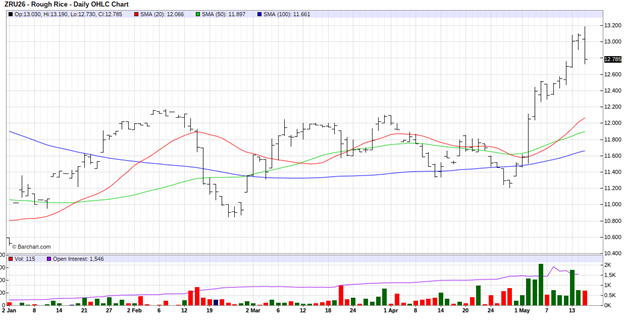
The September 2026 contract has a lifetime trading range of $10.50 to $13.94/cwt. From the $10.50 low made last December, the contract did complete a 50% and a 62% retracement by getting back to $12.22 and $12.63, respectively. The next Fibonacci objective would be a 78.6% retracement at $13.20. That achievement has practically been met as well. In trading Friday morning, the intraday high was $13.19 before turning lower.
In the cash market, old crop, spot bids on the Mississippi River were $5.00 per bushel at the close of the week. New crop, fall delivery bids at dryers were in the $5.37 to $5.44/bu. range. Mill bids averaged $5.50/bu. for fall delivery and early 2027 mill bids were around $5.77 per bushel.
DD50 Rice Management Program is Live
The DD50 Rice Management Program is live and ready for fields to be enrolled for the 2026 season. All log-in and producer information has been retained from the 2025 season, so if you used the program last year you can log in just as you did last year. Log in and enroll fields here: https://dd50.uada.edu.
Use the Arkansas Rice Advisor Internet App!
The Arkansas Rice Advisor site https://riceadvisor.uada.edu functions like an app on your mobile device. There you can readily access the DD50 program, rice seeding rate calculator, drill calibration, fertilizer and N rate calculators, publications, and more.
Additional Information
Arkansas Rice Updates are published periodically to provide timely information and recommendations for rice production in Arkansas. If you would like to be added to this email list, please send your request to rice@uada.edu.
This information will also be posted to the Arkansas Row Crops blog (http://www.arkansas-crops.com/) where additional information from Extension specialists can be found.
More information on rice production, including access to all publications and reports, can be found at http://www.uaex.uada.edu/rice.
Acknowledgements
We sincerely appreciate the support for this publication provided by the rice farmers of Arkansas and administered by the Arkansas Rice Research and Promotion Board.
The authors greatly appreciate the feedback and contributions of all growers, county agents, consultants, and rice industry stakeholders.
Specialist |
Area |
Phone Number |
|
|---|---|---|---|
|
Jarrod Hardke |
Rice Extension Agronomist |
501-772-1714 |
|
|
Tom Barber |
Extension Weed Scientist |
501-944-0549 |
|
|
Nick Bateman |
Extension Entomologist |
870-456-8486 |
|
|
Ralph Mazzanti |
Rice Verification Coordinator |
870-659-5507 |
|
|
Trent Roberts |
Extension Soil Fertility |
479-935-6546 |
|
|
Bob Scott |
Extension Weed Scientist |
501-837-0273 |
|
|
Scott Stiles |
Extension Ag Economics |
501-258-8455 |