Arkansas Rice Update 4-24-26
Arkansas Rice Update 2026-07
April 24, 2026
Jarrod Hardke, Scott Stiles, & Bob Scott
“Every silver lining’s got a touch of grey.”

Relief is Spelled R-A-I-N
Today’s (4/24) rain event isn’t going to break the drought, but it’s tough to remember a more welcome, or more needed, rainfall. How dry was it getting? I received a call about how to best get rid of small willow trees in a field that hadn’t been planted in years.
We’re trailing only 2016, 2017, and 2024 for planting progress in recent years, with 61% planted as of last Monday (Fig. 1). In the upcoming report we should be somewhere north of 70%. Reminder: this is an estimate of planted progress, not a reflection of how much is being planted (we always reach 100% planted regardless of where acres end up).
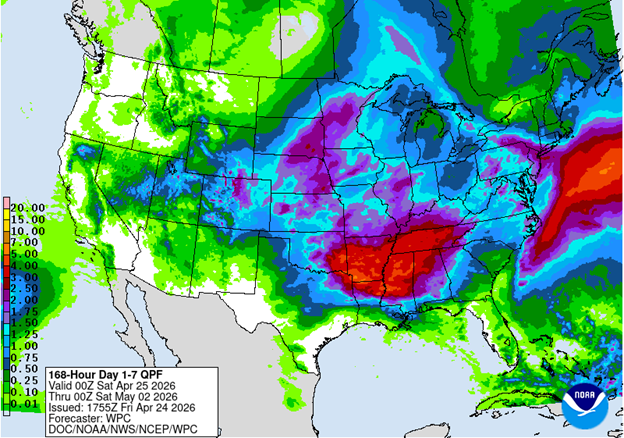
With the upcoming week expected to be filled with a lot more rain (Fig. 2) it appears we’re going to make up for a little lost time and bring April in with average rainfall. We’re just going to get it in a short window rather than spread out. The next window to plant could very well end up after the calendar rolls to May. We’ll still see some more rice planted given the added moisture improving conditions, but the potential extended rainfall may have others hitting the eject button. Still, some will be on the fence depending on whether the next week delivers runoff to improve surface water availability. As the Zen master said, “we’ll see.”
Of note, a small amount of rice was fertilized this week and let this rain start the flood on it.
In this update is info on crop progress, DD50 unit accumulation, PRE/POST herbicides, herbicide drift, rice futures, and urea prices.
Let us know if we can help.
Fig. 1. Arkansas rice weekly planting progress, 2013-2026.
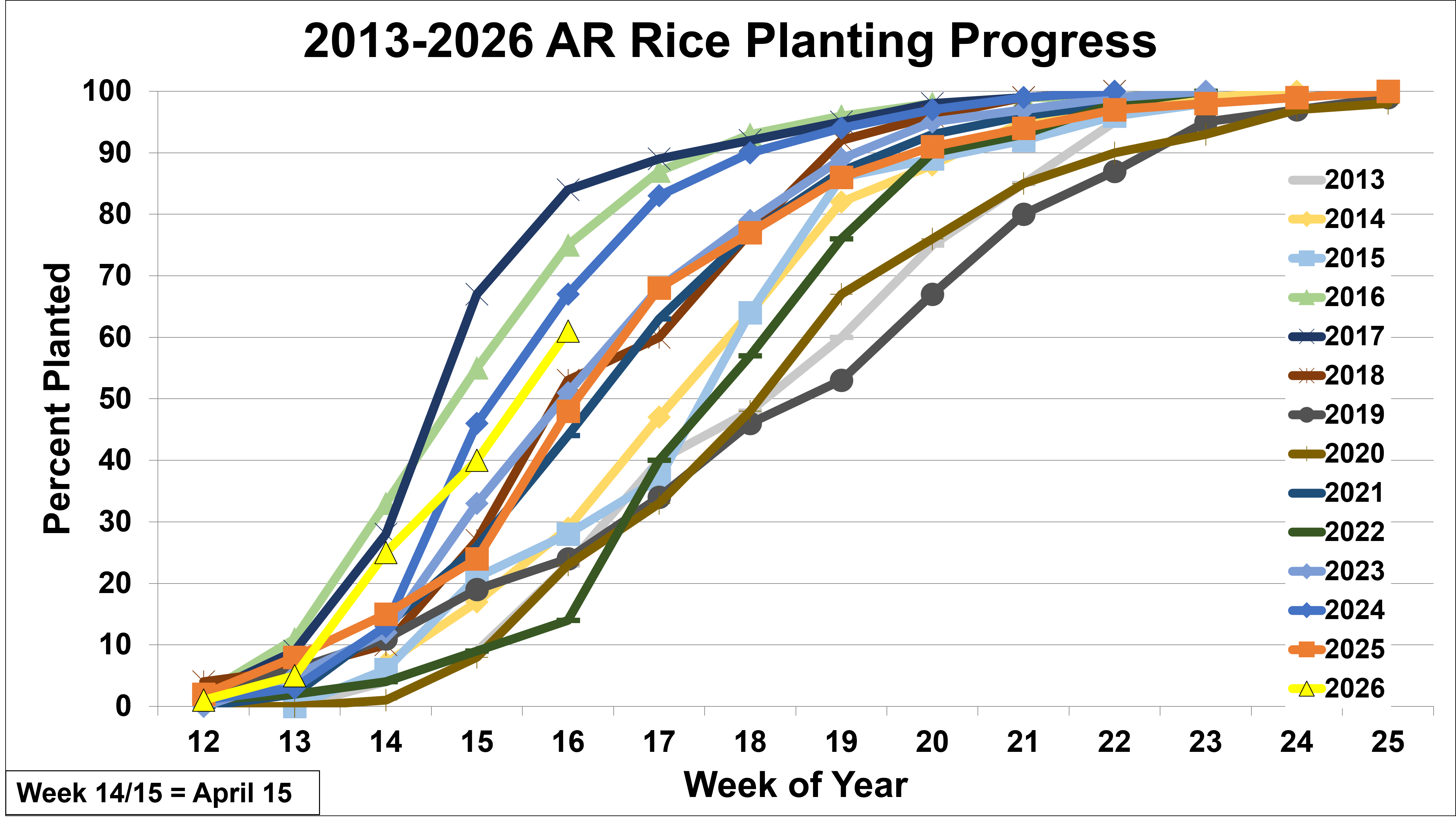
Fig. 2. NOAA 7-day precipitation forecast.
DD50 Units & Rice Progress
Jarrod Hardke
Beyond the conversation surrounding drought and warm conditions, we’ve had a lot of rice emerged for some time. In Table 1 are the cumulative DD50 units for the March 16-31 window, the April 1-15 window, and the total for March 16-April 15. Since 2004, this year marks the 4th most DD50 units accumulated in the last two weeks of March and the most by a wide margin for the first two weeks of April. For the total, only 2012 accumulated more units than in 2026. Rice that emerged in early April has already accumulated enough DD50 units to be in the early window for preflood nitrogen – and in just a few weeks will already be at the final time to apply preflood nitrogen.
While the rice has looked small and held back due to drought conditions, the accumulating of heat units doesn’t stop. As those that have flushed have already observed in the past week, this widespread rainfall is going to make rice surge quickly and show just how far it has truly progressed. When the upcoming forecast rains end, be ready to get on the move – you may be in a position to not only make needed herbicide applications – but those applications could easily end up as preflood herbicides as rice jumps and is ready to be fertilized and flooded as the ground dries. Use the DD50 program to stay on time with preflood nitrogen!
Table 1. Accumulated DD50 units by year for late March and early April, 2004-2026 (Stuttgart).
|
Year |
March 16-31 |
April 1-15 |
Total |
|---|---|---|---|
|
2004 |
156 |
91 |
247 |
|
2005 |
92 |
164 |
256 |
|
2006 |
53 |
228 |
281 |
|
2007 |
251 |
80 |
331 |
|
2008 |
105 |
123 |
228 |
|
2009 |
108 |
86 |
194 |
|
2010 |
59 |
239 |
298 |
|
2011 |
89 |
230 |
319 |
|
2012 |
292 |
243 |
535 |
|
2013 |
50 |
142 |
192 |
|
2014 |
46 |
136 |
182 |
|
2015 |
130 |
256 |
386 |
|
2016 |
135 |
185 |
320 |
|
2017 |
224 |
230 |
454 |
|
2018 |
166 |
60 |
226 |
|
2019 |
66 |
161 |
227 |
|
2020 |
156 |
156 |
312 |
|
2021 |
164 |
153 |
317 |
|
2022 |
107 |
163 |
270 |
|
2023 |
115 |
194 |
309 |
|
2024 |
88 |
222 |
310 |
|
2025 |
196 |
186 |
382 |
|
2026 |
219 |
296 |
515 |
Bobbing and Weeding
Bob Scott
And then it rained… What a difference rain can make. I hope a lot of residual treatments went out between wind gusts prior to this rain setting in. There was a noticeable difference in overall rice growth and weed control in fields that were flushed versus not flushed leading up to this rainy pattern we seem to be entering. I hope the non-flushed fields catch up!
In general water makes most rice herbicides work better. I do not like to apply residual products if there is any standing water in the field and for POST applications, in general, we need about 2/3 of the plant above water for effective treatment. But products like Newpath/Preface, Clincher, and Bolero are all noticeably better when it’s wet versus dry. Of course, all residuals need water for activation. I also have more faith in some “iffy” tank-mixes with the grass herbicides, if we have good moisture and actively growing grass weeds. Still avoid the “do not” ones on the labels.
Not much other advice for while it’s raining. Just get out after this rain and scout to see what makes it through and what we need to address when it stops raining.
We have had a little bit of paraquat drift onto rice and other crops that I have been made aware of. Fortunately, it all seems cosmetic at this point, and I don’t think will affect yield much. The key to looking at these fields is to examine the whorl or where the new leaves are coming out, are they green, injury free and growing, if so, you are probably ok. Newpath and Roundup drift to rice are typically much more damaging than paraquat and Liberty in the long run. Be careful spraying out there. See page 29 of the MP44 for sensitivity table.
Fig. 3. Paraquat on rice.
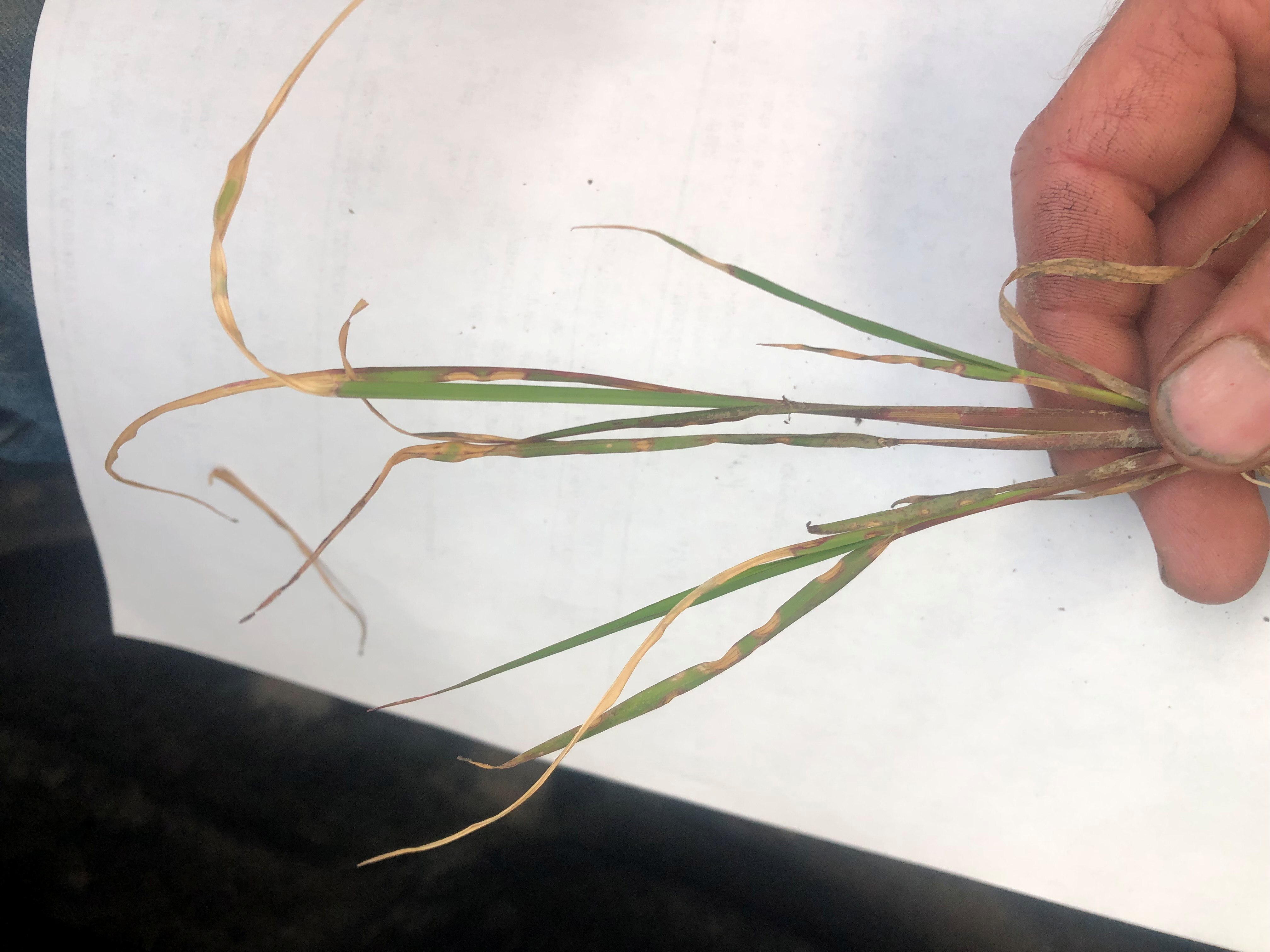
Fig. 4. Liberty (glufosinate) on rice.
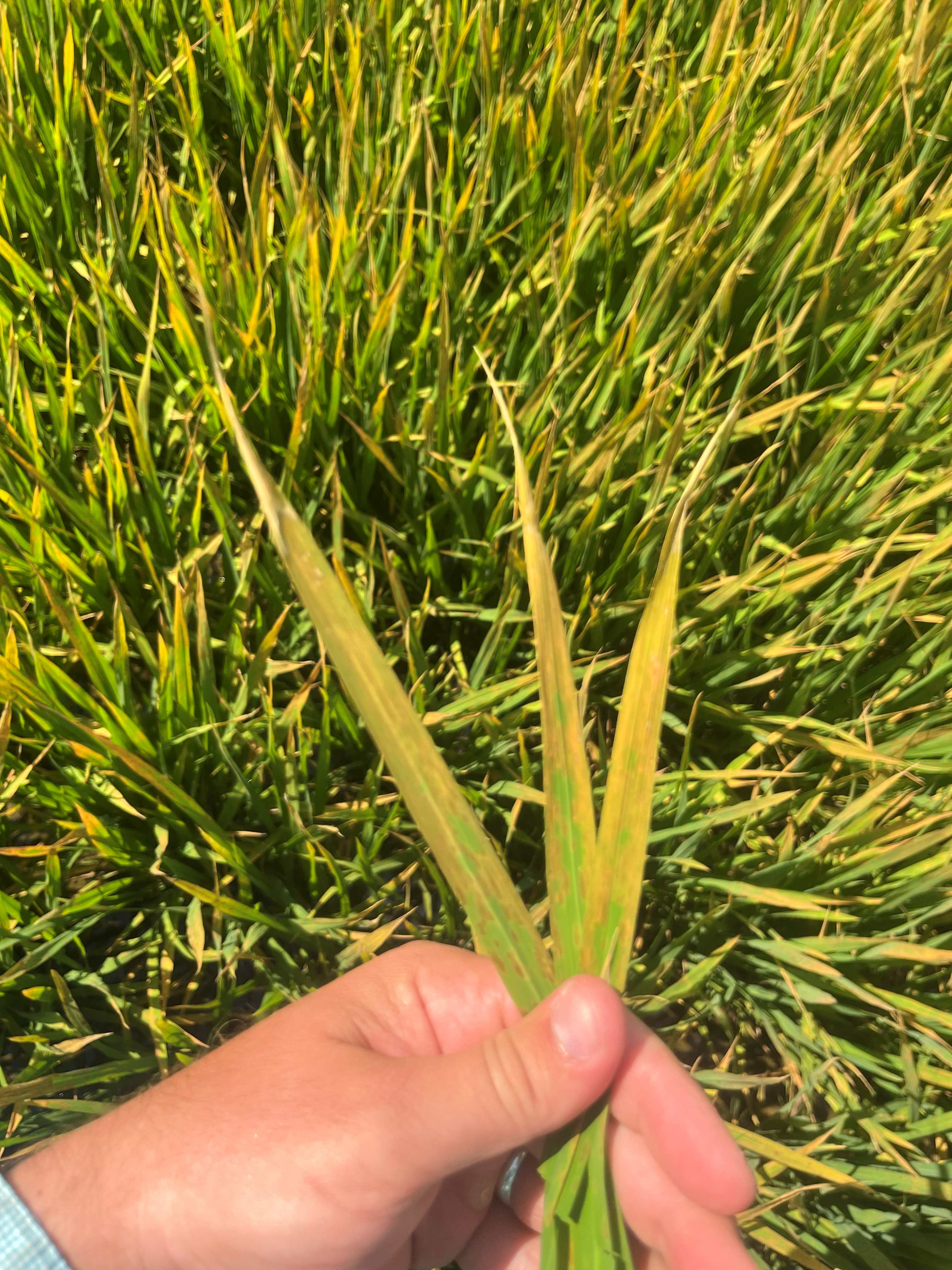
Fig. 5. ACCase on rice.
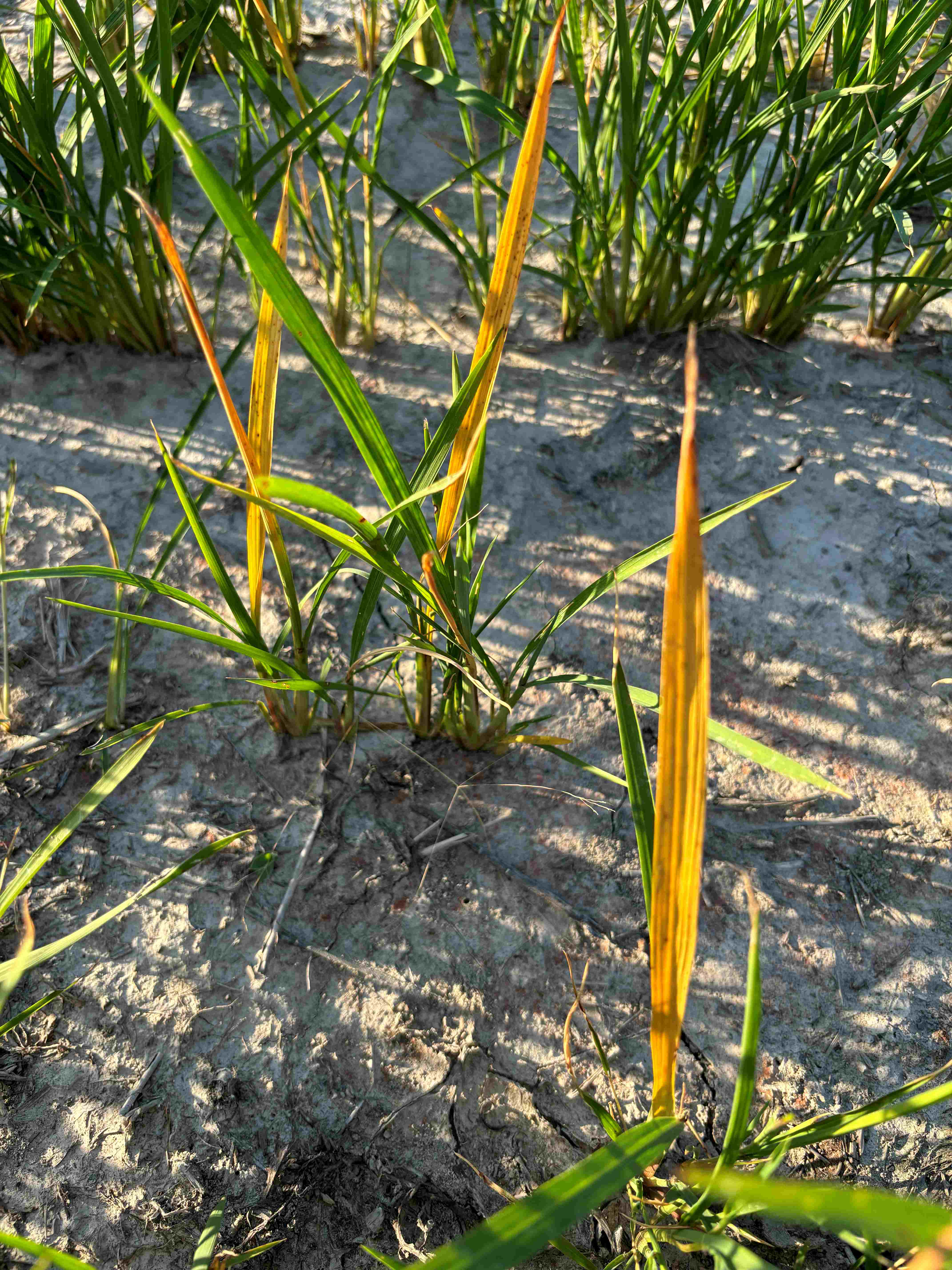
Fig. 6. Glyphosate on rice.
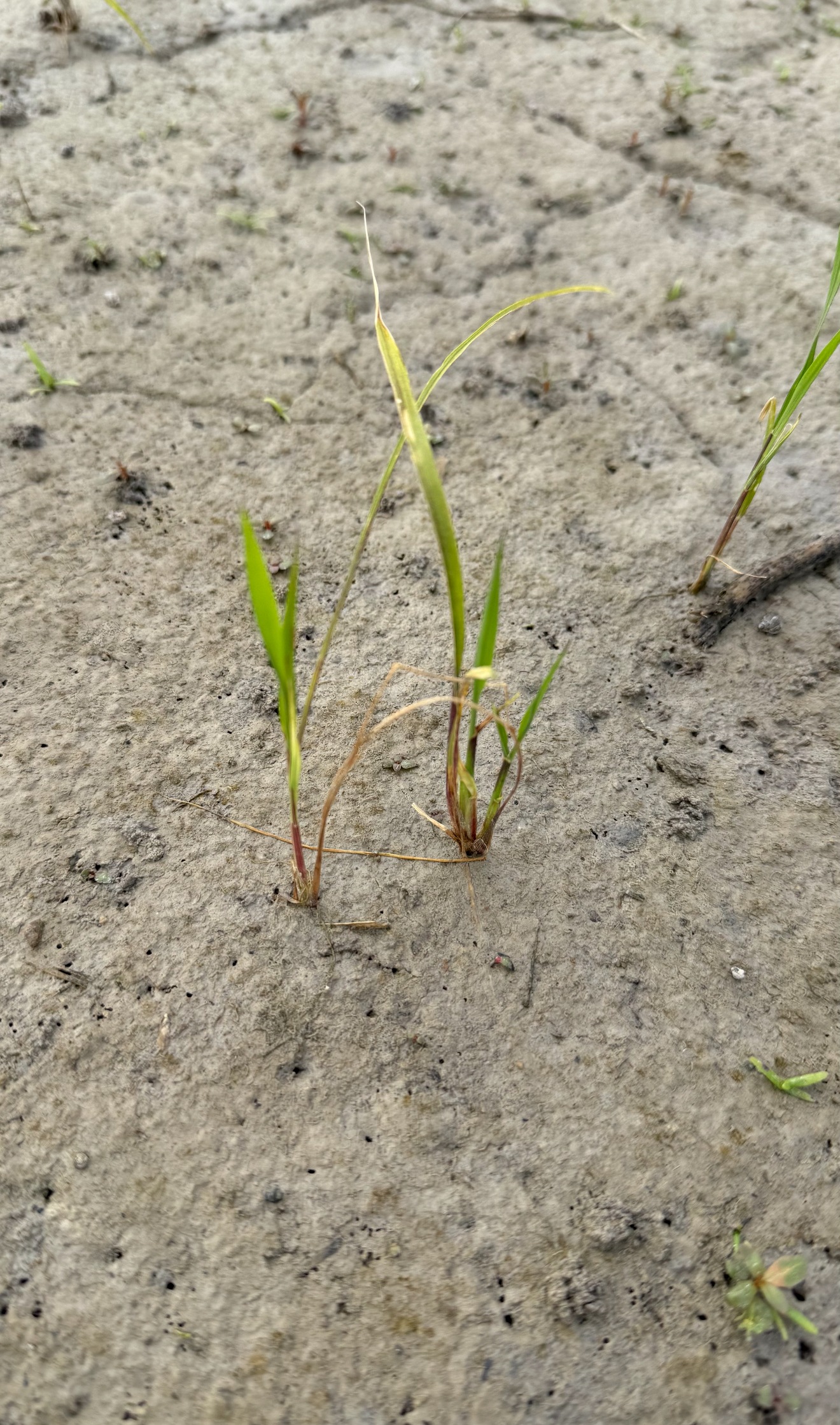
Market Update
Scott Stiles
Chicago rice futures traded in a tight, mostly 20-cent range this week. Heaviest trading volume and open interest is now in the July contract. As a reminder, April 30th is First Notice Day (FND) for May futures. For the typical trader, it is always good practice to exit or roll at least 2 days before FND. First Notice is the earliest day a holder of a "long" (buy) futures contract can be assigned to take physical delivery of the underlying commodity.
July rice started the week trading between $11.30 and $11.50/cwt. and a narrower range and “wedge” formation developed as the week progressed. In mid-morning trading Friday, support at $11.30 was starting to fail. There is initial chart support down at $11.19 at the 100-day moving average. $11 is strong support. An open chart gap remains further down, between $10.63 and $10.68.
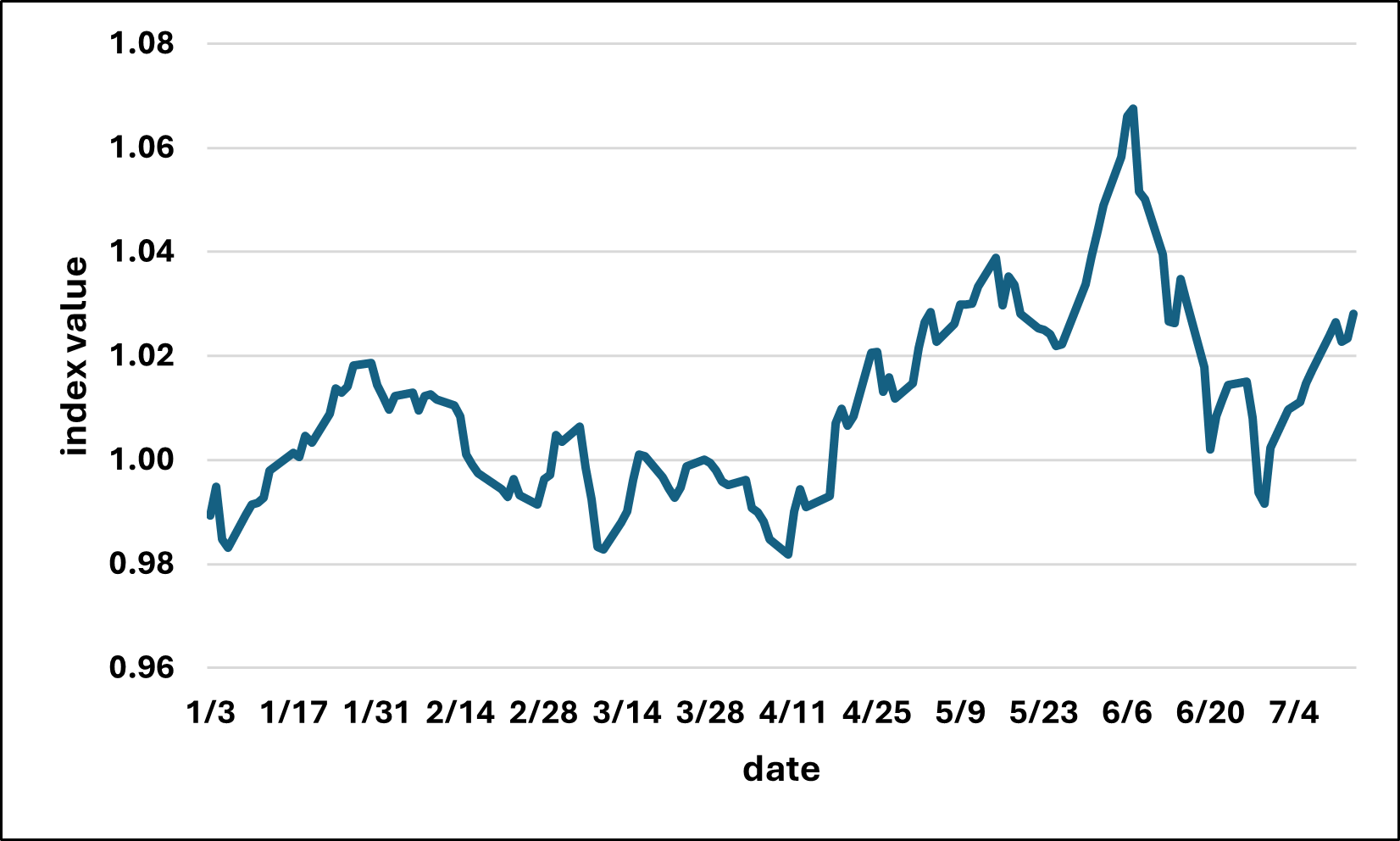
The lower trade to finish out the week is disappointing but the seasonal price patterns are more optimistic. The seasonal tendency for the July contract is generally positive from April until early June (Fig. 7). In the seasonal index below, we use a base value of 1.00 or 100 percent. For example, a value of 0.98 would mean July futures were historically 2 percent below the year’s 12-month average price. Conversely, if the July index value was 1.06 that would mean that prices were historically 6 percent above the year’s average price. In recent years, the July contract reached its highest levels by the first week of June.
Fig. 7. CME July Rice Futures, Seasonal Price Index, 2017 – 2025.
 DISCLAIMER: Seasonal patterns reflect past data and may not predict future performance.
Caution is advised in relying solely on seasonality. Always weigh the seasonal tendencies
against the current fundamental (supply/demand) factors influencing market direction.
DISCLAIMER: Seasonal patterns reflect past data and may not predict future performance.
Caution is advised in relying solely on seasonality. Always weigh the seasonal tendencies
against the current fundamental (supply/demand) factors influencing market direction.
Thursday’s Export Sales report offered very little to excite the rice market. For the week ending April 16th, there was a single 7,000 ton long-grain rough rice sale to Mexico and shipments to there of 3,853 tons. Long-grain milled rice sales were sparse with the largest being 1,410 tons to Saudi Arabia and 386 to Canada. There were a handful of sales (<400 tons) to the Caribbean. Senegal took shipment of 35,095 tons.
Monday’s Crop Progress had the U.S. rice crop at 56% planted as of April 19th. That is ahead of last year (46%) and the 5-year average (40%) for the week. Arkansas was at 61% planted compared to the 5-year average of 37%. Planting is nearly wrapped up in Louisiana and Mississippi is not far behind. The Midsouth states are all blowing the 5-year average away with this year’s warm and dry April. Much needed rain is moving across the Delta Friday.
Table 2. Rice Planted, Week Ending April 19, 2026.
|
State (% planted) |
April 19, 2026 |
Last Week |
Last Year |
5-year avg. |
|---|---|---|---|---|
|
Arkansas |
61 |
40 |
45 |
37 |
|
California |
5 |
2 |
2 |
1 |
|
Louisiana |
90 |
83 |
89 |
82 |
|
Mississippi |
70 |
55 |
39 |
29 |
|
Missouri |
36 |
21 |
16 |
28 |
|
Texas |
71 |
58 |
76 |
73 |
|
U.S. |
56 |
42 |
46 |
40 |
|
Source: USDA NASS, Crop Progress, April 19, 2026. |
||||
It remains to be seen, but very likely the sharp increases in fuel and fertilizer this spring shifted some rice acres into soybeans. Regarding fuel, it appears Friday that peace talks between the U.S. and Iran are a possibility. Plus, Lebanon and Israel have extended their ceasefire by 3 weeks (to May 16th). Diesel futures have had a huge week of gains (about 60 cents above the April 17th close at $3.3974) and are again in the $4 area for first time since April 13th.
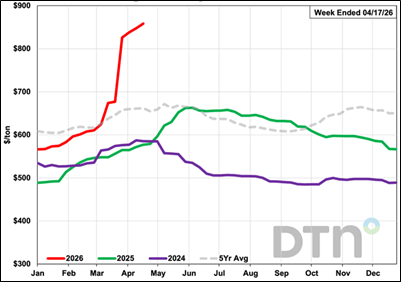
In DTN’s national survey of retail fertilizer prices, Urea had an average price of $858/ton during the second week of April 2026. That is 27% higher compared to last month and 49% higher than last year. The graphic below aligns very well with price reports we are getting from Arkansas input suppliers.
Fig. 8. Average Weekly Retail Urea Prices.
DD50 Rice Management Program is Live
The DD50 Rice Management Program is live and ready for fields to be enrolled for the 2026 season. All log-in and producer information has been retained from the 2025 season, so if you used the program last year you can log in just as you did last year. Log in and enroll fields here: https://dd50.uada.edu.
Use the Arkansas Rice Advisor Internet App!
The Arkansas Rice Advisor site https://riceadvisor.uada.edu functions like an app on your mobile device. There you can readily access the DD50 program, rice seeding rate calculator, drill calibration, fertilizer and N rate calculators, publications, and more.
Additional Information
Arkansas Rice Updates are published periodically to provide timely information and recommendations for rice production in Arkansas. If you would like to be added to this email list, please send your request to rice@uada.edu.
This information will also be posted to the Arkansas Row Crops blog (http://www.arkansas-crops.com/) where additional information from Extension specialists can be found.
More information on rice production, including access to all publications and reports, can be found at http://www.uaex.uada.edu/rice.
Acknowledgements
We sincerely appreciate the support for this publication provided by the rice farmers of Arkansas and administered by the Arkansas Rice Research and Promotion Board.
The authors greatly appreciate the feedback and contributions of all growers, county agents, consultants, and rice industry stakeholders.
Specialist |
Area |
Phone Number |
|
|---|---|---|---|
|
Jarrod Hardke |
Rice Extension Agronomist |
501-772-1714 |
|
|
Tom Barber |
Extension Weed Scientist |
501-944-0549 |
|
|
Nick Bateman |
Extension Entomologist |
870-456-8486 |
|
|
Ralph Mazzanti |
Rice Verification Coordinator |
870-659-5507 |
|
|
Trent Roberts |
Extension Soil Fertility |
479-935-6546 |
|
|
Bob Scott |
Extension Weed Scientist |
501-837-0273 |
|
|
Scott Stiles |
Extension Ag Economics |
501-258-8455 |